Matilda Kachachi
November 17, 2025
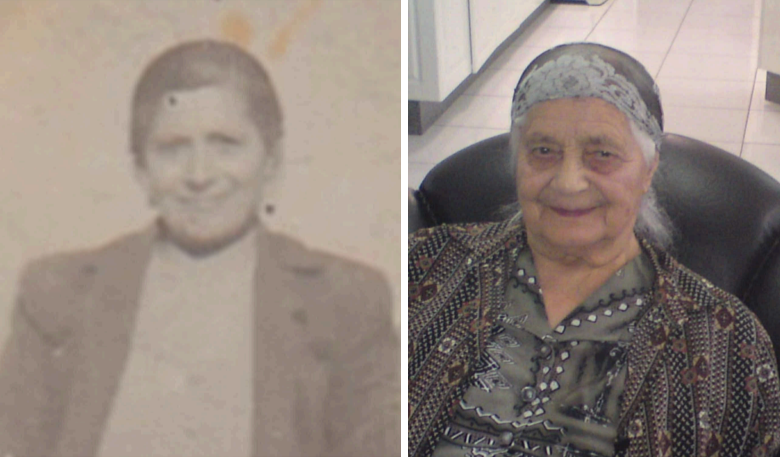
Matilda Kachachi was born in 1918 and passed away in 2013. After arriving in Sydney, Australia, at the age of 80, she shared her experience of the Simele Massacre of 1933 during a heartfelt two-hour family gathering. Surrounded by her children and grandchildren, she recounted the events that had shaped her early life.
Matilda was the mother of eight sons and two daughters. This story is recounted and preserved by her son, Anwar Atto. Mr. Atto currently resides in Australia. He is an established author, linguist, and creator and director of the Assyrian language curriculum at St. Hurmizd Assyrian Primary School and St. Narsai Assyrian Christian College.
A clarification: Many Assyrian cities and villages had their names changed by Turkish, Kurdish, and Iraqi authorities in an effort to erase the evidence of the native Assyrian presence in those regions
My name is Matilda Sulaiman Matti Kachachi. I was born in 1918 in the city of Nineveh ( current-day Mosul, Iraq) to a Chaldean Christian family. My parents were Rejena and Deacon Sleman, and I had five sisters and two brothers.
My father was a jeweler who owned his own business and our family home, which I remember being close to the local cemetery. We lived a relatively comfortable life, though being a Christian minority affected many aspects of it—especially my parents’ decision to marry off their daughters at a young age.
I attended the local school and was always at the top of my class. However, at age fourteen, my mother informed me that a young Assyrian man had proposed to marry me. Soon after, I married Bakos Issac Atto. The marriage proposal was facilitated by Bakos’s paternal uncle, Malik Selim. When Bakos was only ten years old, during the Seyfo (Assyrian Genocide of 1915 by the Ottoman Empire), he fled his village of Qotranis, north of Qodchanis, the headquarters of the Assyrian Church of the East in the Hakkiari Mountains near Lake Van (current-day Turkey). His family had hidden the family savings in the form of gold Turkish Lyre coins, inside a pot built into the house wall. They had hoped someday they would return. But they never did. He escaped on foot with thousands of Assyrians to Urmia, Iran, and later to Baquba, Iraq, where the British had established a refugee camp.
After our marriage, I joined my husband in the Baquba camp, but life there was extremely difficult for me. I did not speak a word of Assyrian as I had grown up mostly speaking Arabic at home. My husband often had to leave for the mountains with other men, leaving me to stay with my in-laws.
In early August 1933, when I was six months pregnant with my first child, we were all moved to the village of Simele, near Nuhadra ( current-day Duhok, Iraq). On August 6, 1933, as we were gathered in crowded conditions, I overheard Iraqi soldiers speaking to each other—some in Arabic, some in Kurdish. They did not realize that I understood Arabic. I heard one of them say, “See what we are going to do with them tomorrow morning.”
Terrified, I ran back to tell the others. I found one man who understood Arabic and told him what I had heard. He spread the message, but soon came back saying not to worry, as people believed they were safe because they were under British protection.
At dawn the next morning, Iraqi soldiers entered the village searching for men and boys over the age of twelve. We hid Atto, my husband’s fourteen-year-old cousin, by dressing him in girls’ clothes. I saw an elderly man hiding under a wooden couch—one of the soldiers dragged him out and shot him.
The killings went on for several days. I witnessed horrific scenes that still haunt me. Soldiers forced young men to file in a line, then shot the first one to see how many they could kill with a single bullet. I saw them fall one after another. Another group of young men from the Baz tribe had tried to hide in the wheat barns, but the soldiers found them and opened fire as they ran.
I had a dear friend named Basseh, a kind woman who was eight months pregnant. We often went to fetch water from a nearby stream. The water turned red with blood, yet we had no choice but to drink it. I can still feel the taste in my mouth to this day.
One day, as we bent to drink, a soldier approached Basseh and stabbed her with his bayonet. She fell, her abdomen torn open, and her baby came out. I screamed, pulled my hair, and ran away crying—devastated and alone.
On August 12, 1933, two policemen came to the village calling my name. They told me to accompany them to the police headquarters in Nuhadra (Duhok). I was terrified, but they insisted. I brought with me the wife of Malik Selim, my husband’s paternal uncle.
When we arrived, they led me to an office—and there was my father. We embraced and wept. The police superintendent told me I was to return with my father to Mosul. I refused, saying I had seen too much death, and that since my father had married me into this community, I must stay with them—to live or die among them. My father pleaded with me, not believing he had found me alive. Finally, I agreed to leave on one condition: that the superintendent promise to protect the women and children in the village and move them to a safer place. He assured me that he would, and only then did I go with my father.
When we arrived home in Mosul, my father immediately bought food, fruit, and supplies to send to the survivors in the village. Three months later, I gave birth to my first son, Isaac. My husband later returned secretly, and we eventually fled together to Syria.
Our journey to Khabour, Syria, was another chapter of hardship. I heard that many men were killed when French authorities forced them to swim across the river back to Iraq, where Iraqi soldiers were waiting to shoot them as they crossed.