Life of a Faithful and Altruistic Woman: Iniar (Ino) Jajoo (1902-1992)
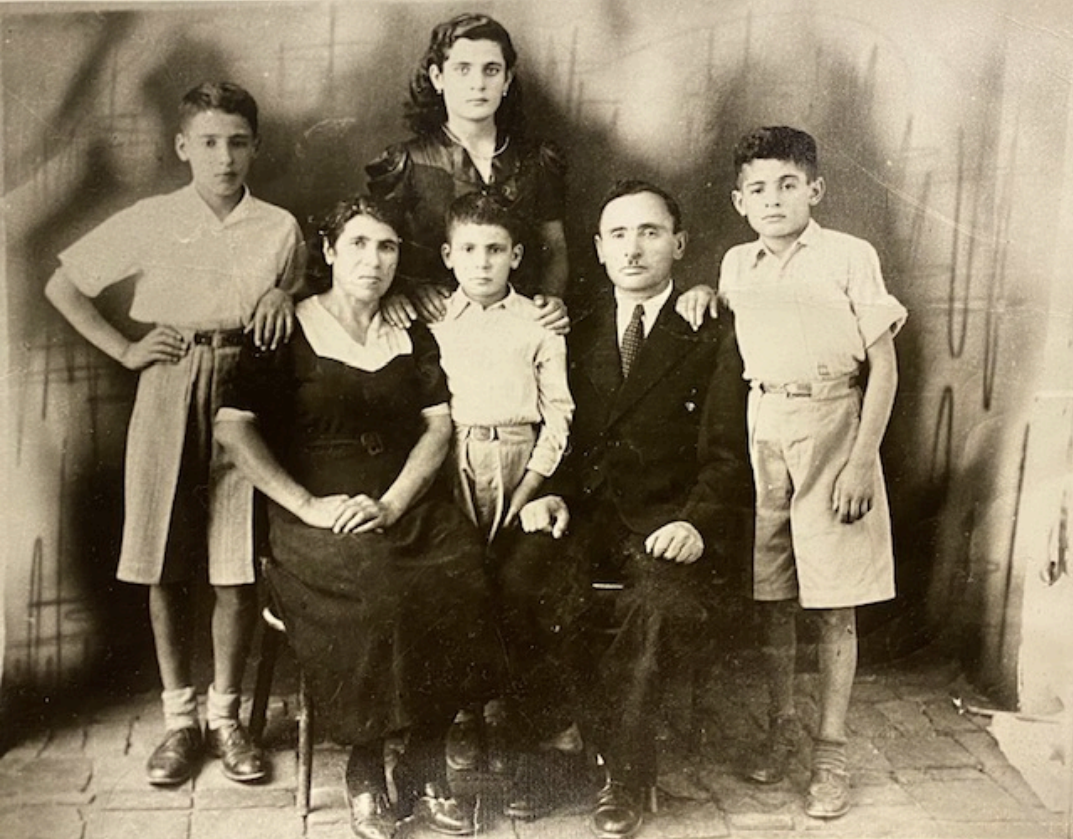
The Jajoo family
Iniar Saoul, also known as Ino Jajoo, was born in 1902 in the village of Birijeh in the district of Tkhuma in what is known today as southern Turkey. She was born to her father, Sawa, and mother, Dora. Sawa was well-versed in herbal and naturopathic remedies. Her family and the families of her two uncles all lived together. The inhabitants of this district were primarily farmers, growing various crops and raising farm animals. They lived peacefully in this beautiful mountainous region and followed the rules set by the village elders known as the "goziraya". The houses were built with rocks on the hillside, and the children recalled passing their days working, enjoying nature, and having many celebratory gatherings, such as the religious feasts, including regular prayer sessions and Lent. Children were taught to observe and follow these traditions.
At the age of 14, Ino was betrothed to the neighbor’s son, Warda (Werda) Jajoo. A year later, due to ongoing persecution by the Ottoman Turkish forces (which started around 1914-1915), despite fierce resistance by the Assyrians of Hakkari, she and Warda were forced to flee for their lives. She always recalled how one of her cousins, Yalda, hid many Assyrian books in a copper pot, which he buried by the water mill in the hope that someday they would return and recover them. After the defeat, many had to escape to higher altitudes to hide behind rocks and witness their houses being burnt down. While fleeing on foot, she witnessed many dying from hunger, thirst, disease, and exhaustion. She was forced to abandon her sick and frail mother to save herself and her baby brother, Giwergis (George), whom she carried on her back. Until the day she died, Ino bitterly regretted leaving her mother behind, not knowing what happened to her, whether she was eaten by the wolves or met a fate even worse than that. During the death march, she witnessed many barbaric acts and saw many Assyrian women whose tongues and breasts were cut off by the Turkish army. At some point, they took refuge in a large sill (mill) and noticed that the ground they walked on was soft, only to discover that they were walking on corpses covered with crops.
Ino also told her family how, during this persecution, the much-beloved Church of the East’s Catholicos-Patriarch, Mar Benyamin Shimun, was assassinated in the city of Kohneshar (Kohne-Shahr) in Iran. Several Assyrian men, including Warda and his younger brother, Yavela, went to retrieve the body of their Patriarch for proper burial. During this fight, Yavela and many others were killed, but the survivors were able to obtain Mar Benyamin's remains.
After several years of wandering, living in poverty, and even begging for food, in 1922,Warda and many Assyrian men enlisted in the British army, the Levies, in Iraq. They lived in refugee camps in Baqubah. Ino had 2 children, but both died in infancy. Warda was promoted to sergeant and eventually was honorably discharged in 1928 due to "reduction of the establishment". They moved to Mosul, and their daughter, Naimeh, was born there.
During these years of persecution, Ino and Warda lost many family members, one of whom was Ino's brother, Shimun, who died at the age of 24. Ino became weak and sick and was advised by the doctors to move to cooler climates as Mosul was too hot for her. So, they migrated to Hamadan in Iran. Moving to a foreign country, yet again, and not knowing the language was especially hard for them. They were mistreated, and she often recalled that she wasn't allowed to touch the groceries while shopping as she was told she was Najess (dirty) as she was Christian. Subsequently, Ino and Warda were blessed with three sons: George, David, and Thomas. Life remained very difficult for them, and finally, in 1955, they all moved to Tehran. A year later, Warda, having been ill for quite some time, passed away at the age of 55.
Ino continued to live with her family, who gradually started the immigration process to Australia beginning in 1984. She passed away in 1992 at the age of 90, surrounded by her sons, daughters-in-law, and grandchildren. She shared her heart-wrenching stories with her family members and would often cry herself to sleep, having lost more than 20 members of her family during the Assyrian genocide of 1915. She always fondly remembered her childhood days in her village. She is survived by her grandchildren: Ninva, Benipal, Ramina, Sabrina, Hanibal, Raman, Ramsin, and Rameil.