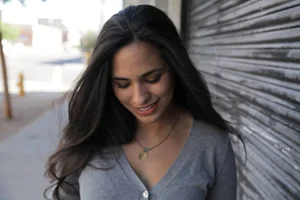
WRITTEN BY: JUNE ISHTAR JAKO
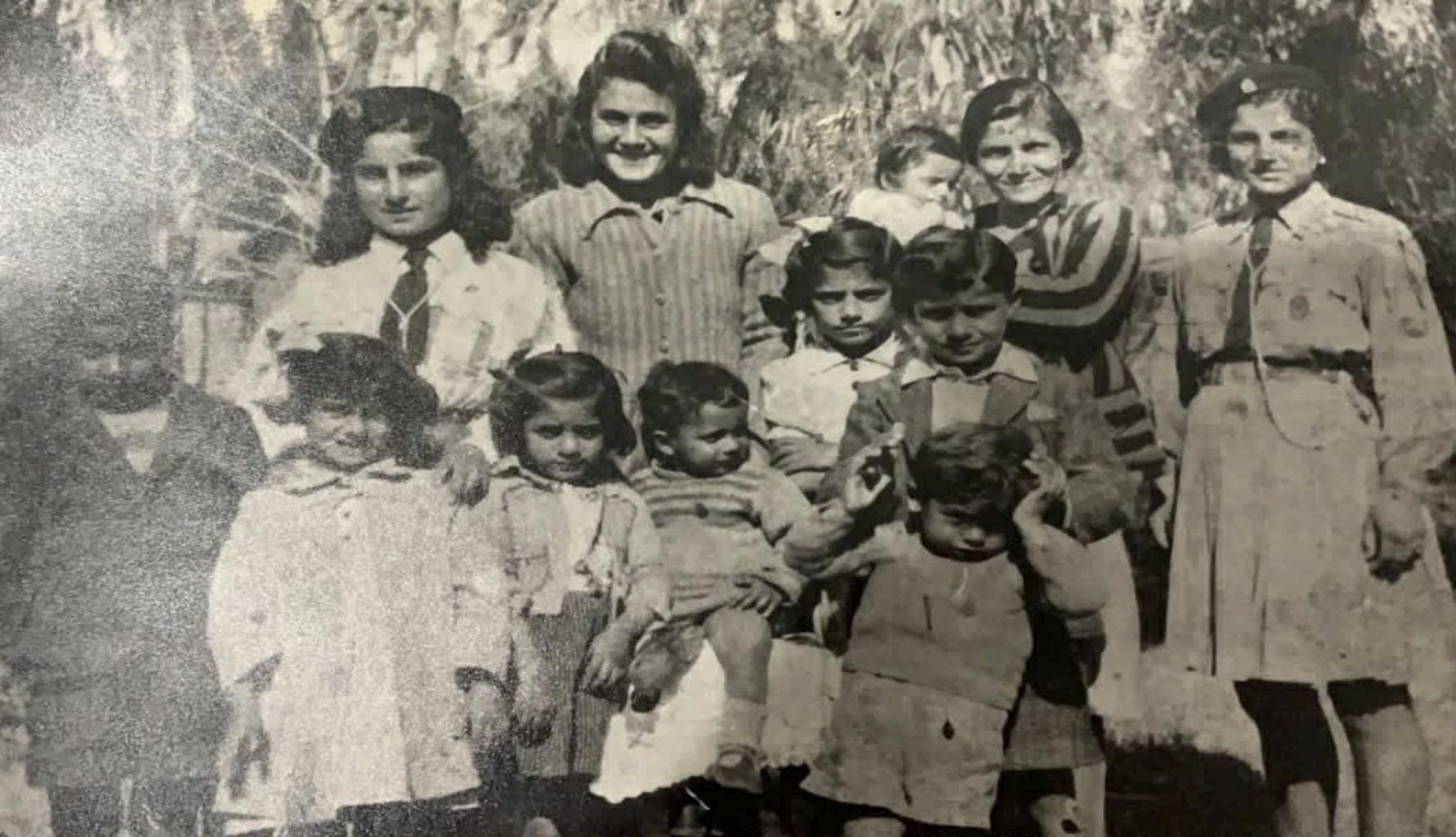
Khana’s family and cousins in Habbaniya, Iraq
Photo: Courtesy of June Ishtar Jako
My name is June Ishtar Jako. I am a mother and a grandmother living with my family in Sydney, Australia. I migrated to Australia in 1984 under the humanitarian program, after living in France for nearly three years. Before that, I left my birthplace, Baghdad, where I spent the first twenty years of my life. Australia became my second home—a place where I was finally able to complete my higher education and rebuild a future.
I share this story as an act of remembrance.
It is a story of genocide against my Assyrian nation. While it echoes the experiences of thousands of survivors, it is also deeply personal. It is the story of my grandmother, and through her, the story of a people.
My maternal grandmother’s name was Khana Khnaneesho, known affectionately as Khano. She was born in the Assyrian village of Urmi, in present-day Iran, into an Assyrian Christian family. Her parents were Khnaneesho and Rakhel, and she was the youngest of four daughters. Because she was the smallest, she was called Sorto, meaning “the little one.”
I was very close to my grandmother. During my school years, I spent most of my days with her. She took me everywhere and made sure I learned—not only practical things, but values, faith, and identity. Even as a child, I listened intently to her stories. At the time, I did not fully understand them.
Later, as I learned about the Seyfo genocide, I realised that what she shared with me was not simply family memory—it was historical testimony.
My grandmother told me that one day, while she was at home with her mother and sisters, her father suddenly burst through the door in terror. He shouted, “Hurry! I must take you up onto the roof—the infidels, the ‘hoshare’ (as they were called in Persian), are here to kill us.”
He placed a ladder against the wall and helped each of them climb to the roof. As he pulled the ladder up behind them to prevent anyone from following, he was shot in the hand. He lost four fingers instantly.
Soon after, hundreds of Assyrians fled through the village, escaping the murderers who pursued them. My grandmother’s family joined the mass of people, fleeing without knowing where they were going. Along with thousands of others, they eventually reached Baqubah, near Baghdad, where the British Army had established a refugee camp.
During the journey, my grandmother—still just a child—was seated on a donkey and escorted by her older sister, Khata. When they reached a river, Khata told her, “Sit under this tree while I cross with the donkey. I will come back for you.”
But the chaos was overwhelming. The crowds pressed forward toward Baqubah, and Khata was unable to return. My grandmother was left alone under the tree, surrounded by fear and confusion.
Eventually, an Assyrian man who knew the family found her and carried her to safety. She was reunited with her mother and sisters. Tragically, her father later died from his injuries. His wound became infected, and he passed away from gangrene.
My great-grandmother Rakhel settled with her daughters in Habbaniya, where she worked as a caretaker at a private school in order to survive and protect her children. My grandmother grew up there, later marrying my grandfather Aziz Eshaya, son of Moyshawa. Together they were blessed with many sons and daughters.
My mother, Lina, was the fourth child in the family. She spent her early life in Habbaniya before moving to Baghdad and later Dora. My grandparents eventually migrated to the United States, where they are now buried in Los Angeles, California. My mother settled in France. One uncle moved to Holland. I, along with another aunt, cousins, and my three sisters, made our home in Australia.
This scattering is one of the deepest wounds left by genocide.
Our family—like so many Assyrian families—was torn apart and dispersed across the world. Genocide does not end with death alone. It continues through displacement, exile, and the permanent loss of homeland.
I pray for the day when we, and all Assyrians, may once again be united—living in dignity on our ancestral land.
This testimony is offered in memory of those who were lost, and in honor of those who survived.
June Ishtar Jako is an Assyrian Australian writer, mother, and grandmother. Born in Baghdad, she migrated to Australia under the humanitarian program in 1984 after living in France. She is a survivor-descendant of the Assyrian genocide (Seyfo) and is committed to preserving Assyrian history through intergenerational storytelling and testimony. She lives in Sydney, Australia.